
The recent storms that swept across Martha’s Vineyard were a stark reminder of how vulnerable our island infrastructure can be. With wind-driven power outages lasting days for some residents, the conversation has shifted from “green energy” to something much more immediate: resilience.
While many homeowners are looking toward solar panels and battery backups to keep the lights on, there is a third, often overlooked piece of the puzzle that makes the entire system work better, longer, and for less money. It’s the “Triple Threat” to rising energy costs and storm-related stress: Solar, Storage, andPassive Design.
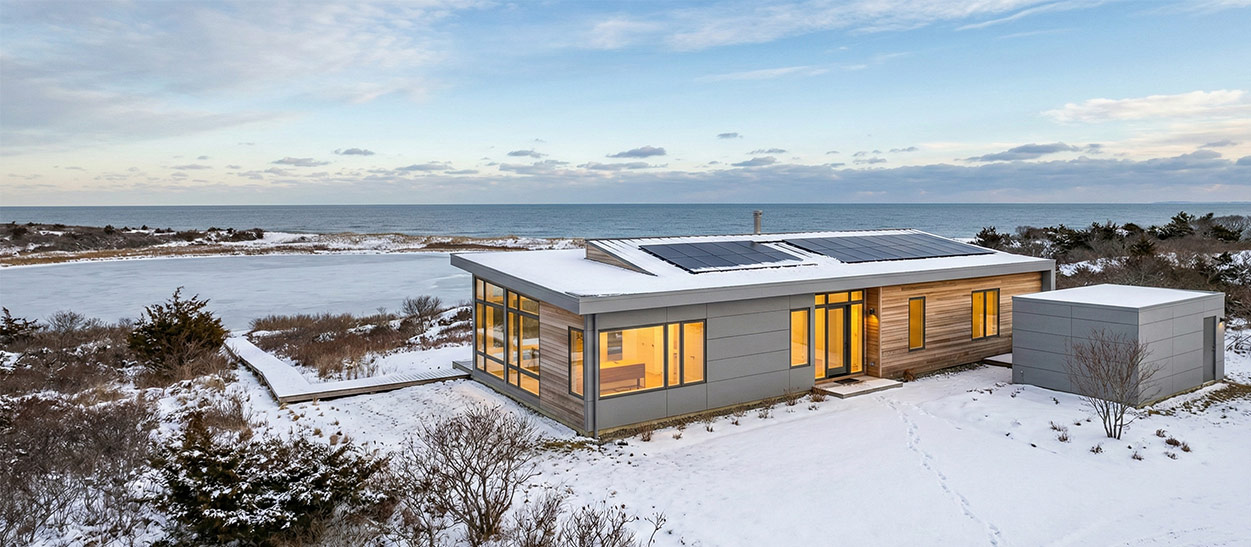
1. The Power of the Envelope (Passive Design)
Most traditional homes on the Vineyard are “energy sieves.” When the power goes out in February, the heat starts escaping immediately. This creates a massive “load” or demand on any backup system you have.
With Passive House principles—superior insulation, airtight construction, and high-performance windows—the house itself acts as a thermal battery. As we previously noted, even during a total power failure in freezing temps, a well-built passive home can maintain a floor temperature of 50°F without any active heating. This isn’t just about comfort; it’s about protecting your investment by making sure pipes never freeze, even if you are off-island.
2. Right-Sizing Your Storage (Battery Backup)
The biggest hurdle with solar-plus-storage is often the cost of the batteries. If you are trying to power a drafty, inefficient home, you need a massive battery bank to keep the HVAC system running.
However, when you pair a battery system with a passive envelope, the math changes. Because the heating and cooling loads are so minimal, a much smaller (and more affordable) battery system can power your essentials—well pump, refrigerator, and lights—for a significantly longer duration. You get more “run time” out of every kilowatt-hour stored. This doesn’t necessarily mean you have to build a brand new house. There are numerous home envelope upgrades such as insulation, windows, finding drafts and blocking them, and others that can be implemented to reduce total energy needed.
3. Solar: The Engine of Independence
The Vineyard is an ideal place for solar, but as many of us have learned, snow and wind can be factors. A photovoltaic system paired with a battery offers incredible peace of mind after the sun goes down. By generating and storing your own power, you buffer your family against the steadily rising costs of grid electricity.
Why This Matters Now
Energy costs are not trending downward, and New England winters aren’t getting any milder and our nations trend towards electrification will continue to place a heavy demand on energy. By focusing on the “Triple Threat,” you aren’t just buying a gadget for your roof; you are investing in a house that works for you.
When the next gale-force wind knocks out the grid, the goal is to have one less headache. You want a home that stays warm, keeps the water running, and minimally impacts your wallet.
Ready to winter-proof your Vineyard home? Whether you are looking to build new or retro-fit your current property for better resilience, Farley Built is here to help you navigate the path to a high-performance home.
Learn More About Recent Rate Hikes & Market News
- Mass.gov Household Heating Costs: A government-provided breakdown of how the 2025-2026 winter season is impacting energy bills, specifically comparing electricity, oil, and propane costs.
- The Vineyard Gazette: Wind Freeze & Affordability: A local perspective on how regional delays in offshore wind projects and rising natural gas prices are creating a “financial gut punch” for Vineyard families this year.